ENGINEERING PROOF 022 / A COUNTEREXAMPLE THAT IMPROVED THE CONTRACT
One action. Two hashes. Fixed.
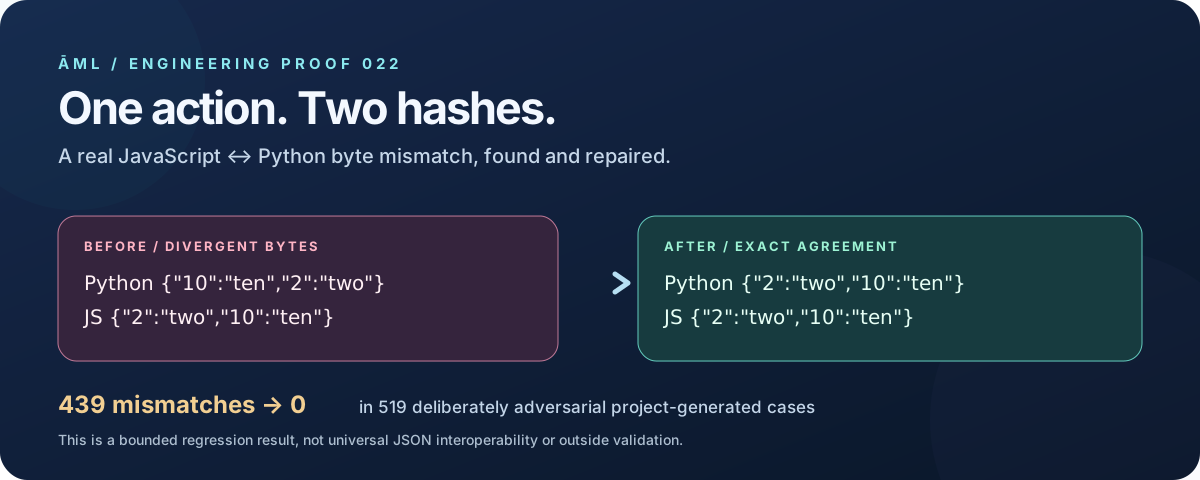
The first JavaScript ↔ Python proof passed 13 published cases. An adversarial object with keys "10" and "2" exposed a real mismatch: each language hashed different JSON bytes for the same proposed action. We reproduced it, aligned the Python wire order, and kept the failing baseline visible.
This is a project-maintained regression test of a bounded JSON subset, not an outside witness, a formal proof of all JSON, or evidence of real tool execution.
The illustration shows the core counterexample; the actual proposal bytes and SHA-256 digests appear below.
PUBLISHED CHALLENGE13 / 13Existing cases still pass.
PRIOR PYTHON ORDER—mismatches in this deliberately adversarial corpus.
FIXED PYTHON ORDER—mismatches in the same cases.
See the mismatch in bytes.
Select a nested case, a numeric boundary, or a control where the original implementation already agreed.
07 / INSPECTABLE CASES
Loading…
SELECTED CASE / —
Loading…
Reading report.
BEFORE / OLD PYTHON ORDER
—
PROPOSAL SHA-256
—
AFTER / FIXED PYTHON + JS
—
PROPOSAL SHA-256
—
OLD PYTHON WIRE BYTES
—
JAVASCRIPT WIRE BYTES
—
FIXED PYTHON WIRE BYTES
—
The digest difference comes from byte order, not a change in intended recipient or policy.
Re-run the corpus
One deterministic seed generates 512 proposals alongside seven named edge cases. The script runs a separate Python process, compares exact JSON and plan hashes to JavaScript, and checks this published report.
The JavaScript reference sorts keys, rebuilds an ordinary object, then stringifies it. ECMAScript enumerates array-index keys numerically before other strings. The former Python code preserved a simple lexical sort. Keys such as "01" and "4294967295" are not array indices.